

One Workflow (1WF) — Underwriting Workflow Redesign
A multi‑phase UX/UI transformation of Markel’s underwriting platform
Introduction
One Workflow (1WF) is Markel’s internal underwriting platform, used globally by underwriters and outsourced teams to create submissions, price risks, manage tasks, and generate front sheets. After joining Markel, I became the lead UX/UI designer responsible for improving the platform’s usability, consistency and efficiency across its most critical workflows.
This case study focuses on the redesign of two major areas:
- The Submission Creation process (completed)
- The Policy Page (in progress)
These two flows form the backbone of underwriting activity, affecting speed, accuracy, and user confidence. My goal was to modernise the experience, reduce friction, and establish a cohesive design system across the product.
01. The Challenge
Why change was needed
Across multiple workshops with underwriters and Xceedance (outsourced back office) teams, users consistently reported similar issues:
Submission Creation Pain Points
- Complex structures (packages, programmes, layers, sections) were difficult to understand and manage.
- Users often relied on older system called Sequel Underwriter instead of 1WF because the structure in 1WF felt unintuitive.
- Key data fields were hidden behind subtle expanders or scattered across the page, leading to missed information.
- Important details and actions where difficult to find.
- Lots of tedious, repetitive tasks, limited bulk actions.
Policy Page Pain Points
- Excessive horizontal scrolling and density of data, with inconsistent ordering across classes.
- Underwriters and processors needed different information priorities, but the interface served everyone the same cluttered view.
- Structure of layers/sections was unclear and difficult to scan compared with Sequel Underwriter.
- Missing data points (broker details, underwriter per layer, policy period) limited their ability to respond to broker questions quickly.
- Linked emails, documents and logs lacked clarity or provided incomplete activity history.
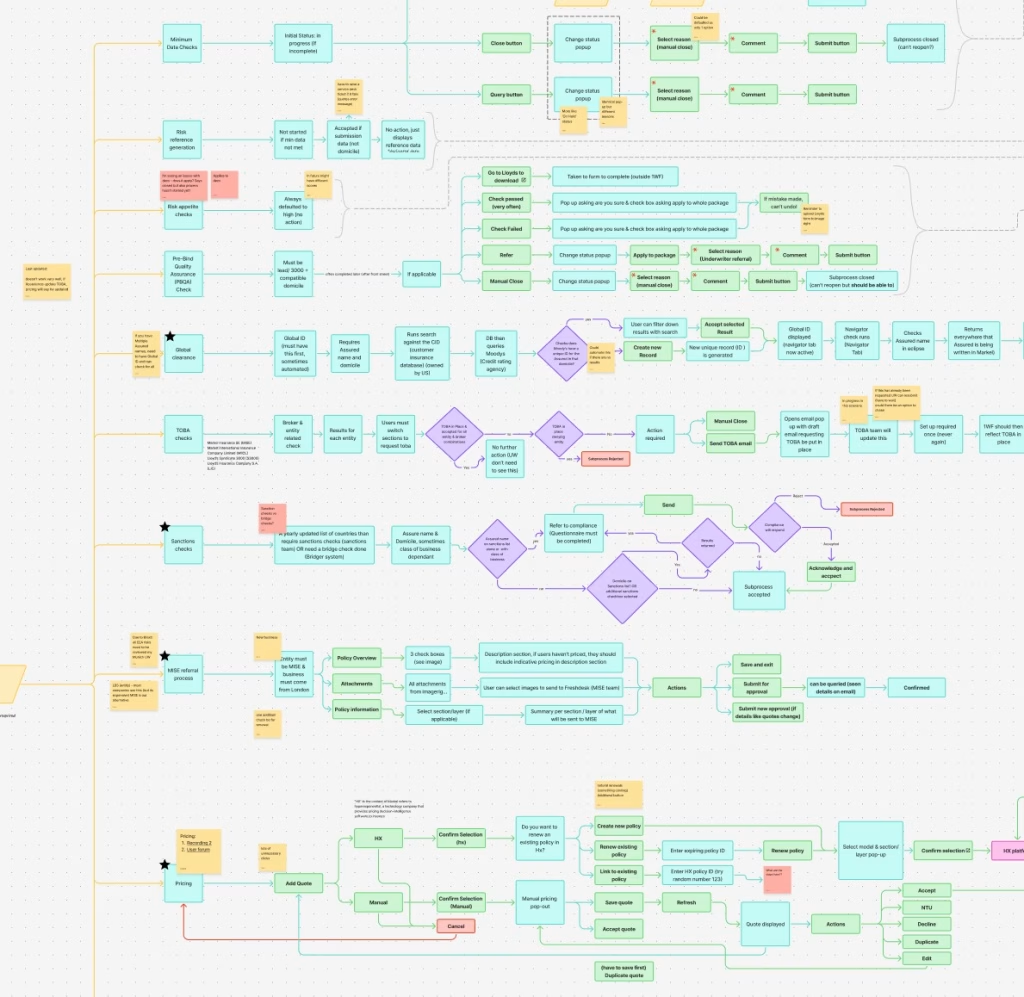
– Process map for current policy page
02. Discovery & Research
I led a series of structured, role‑based research sessions with:
- Underwriters across Marine, Energy, Financial Institutions & Casualty
- Xceedance processing teams
- Business Analysts and developers
Activities included:
- Live screen‑sharing walkthroughs of existing workflows
- Comparative analysis with Sequel Underwriter
- Task walkthroughs (creating submissions, pricing, reviewing structures, handling tasks)
- Quantifying pain points, errors and inefficiencies
- Capturing functional gaps and class‑specific needs
Key insights gathered
HX pricing integration was essential but often misunderstood; users needed clearer model selection, data expectations and defaulting logic.
- Users needed structural consistency across Submission Creation and Policy Page.
- The system contained duplicate concepts (e.g., structure, sections, layers) but presented them differently across pages.
- Many actions (e.g., assigning sub‑process tasks, identifying conflicts in Navigator) required manual workarounds such as Excel trackers and screenshots.
03. Design Goals
1. Establish a consistent structural model
Align the Submission Creation and Policy Page layouts to create predictable navigation and reduce cognitive load.
2. Reduce friction and unnecessary steps
Simplify complex flows, default non‑critical data, and reduce repetitive manual input.
3. Support cross‑team workflows
Balance needs of underwriters (pricing, structure clarity) and Xceedance processors (sub‑process task management, auditability).
4. Improve data visibility and prioritisation
Surface the right information at the right time, based on context and user role.
5. Build for future scalability
Introduce layouts, patterns and components that can be expanded as 1WF evolves (e.g., notifications, audit logs, multi‑year pricing views).
04. Solution Part 1: Submission Creation — Redesigned Process
A more intuitive, structured approach
Using insights from multiple user sessions, I redesigned the submission creation flow to mirror the conceptual mental model users already hold — similar to the structure seen in Sequel Underwriter.
Key Improvements
1. Clearer organisational hierarchy
- Introduced a unified pattern for packages, programmes and combined risks, making structure building logical and sequential.
- Users can add sections and layers using consistent components across all classes.
2. Improved visibility of critical data
- UMR, inception/expiry, underwriter, class and other key identifiers now appear at the top level.
- Expanded structural panels follow predictable spacing and hierarchy.
3. Minimum data checks made visible
Many processors explained frustration around not knowing why references weren’t being generated. I redesigned the minimum data checks to be more transparent.
4. Layout consistency with future Policy Page design
Submission creation became the anchor for the design language I later applied to the Policy Page.
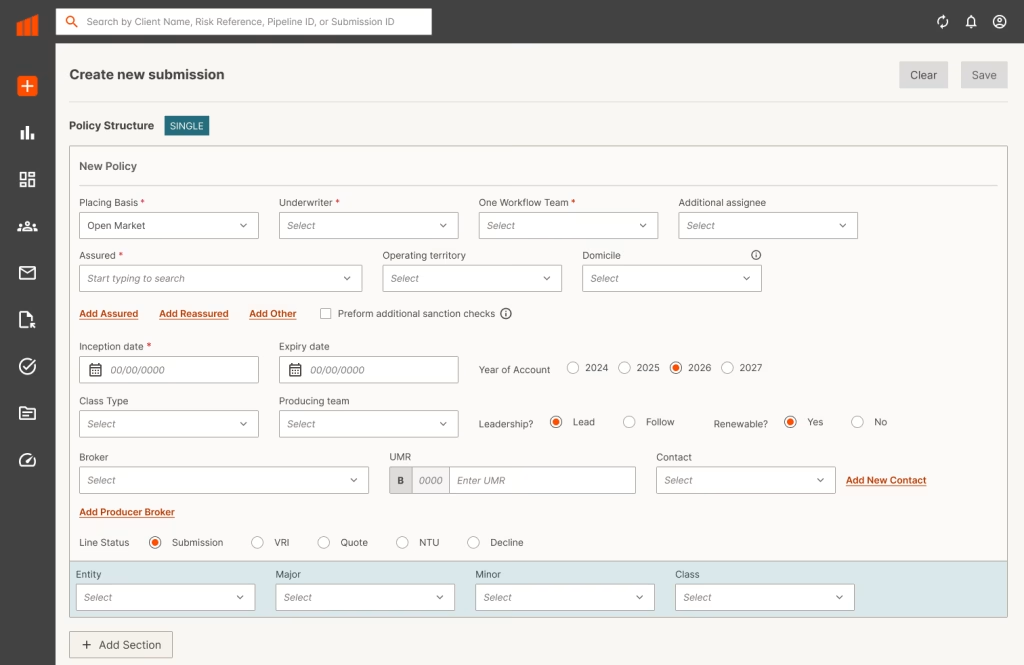
– Submission page Figma screen
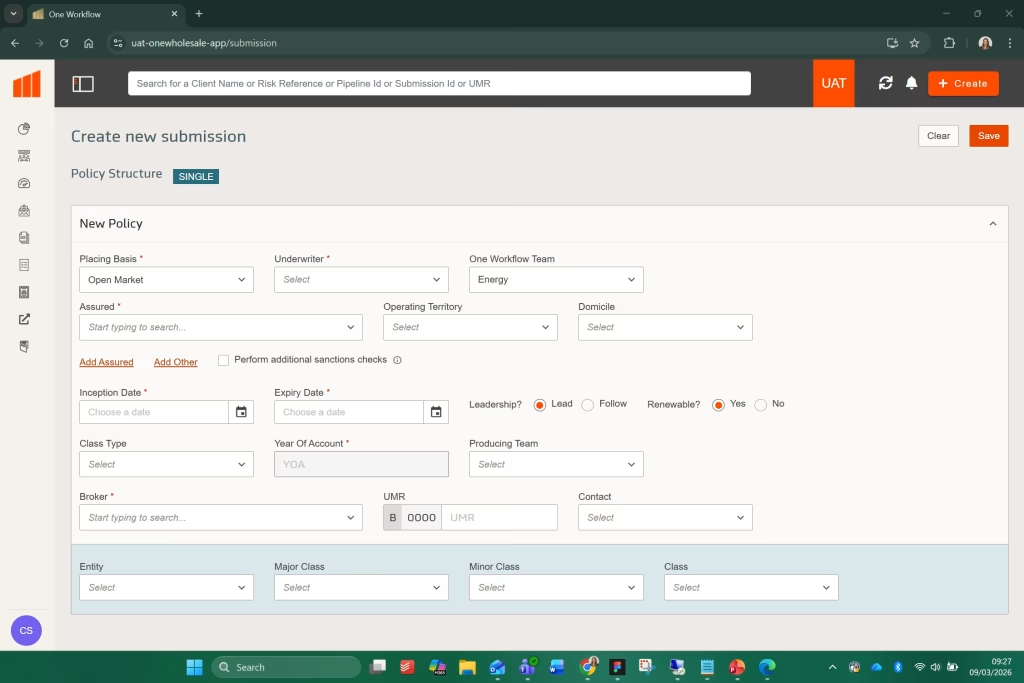
– Current development screen which is still under construction, I work closely with the backend developers to ensure screens accurately reflect designs
05. Solution Part 2: Policy Page — Redesign (WIP)
The Policy Page is one of the most used and most complex parts of the system.
My redesign addresses its most urgent issues while laying groundwork for long‑term UX improvements.
Key Improvements in Progress
1. Re‑engineered structural layout
To fix the fragmented sections/layers view, I am introducing a structure inspired by the new submission creation layout, helping underwriters more easily:
- Identify combined vs layered policies
- View per‑layer underwriters
- Scan limits, premiums and written lines at a glance
2. Streamlined pricing workspace
3. Reduced scrolling + better prioritisation
4. Integration improvements
5. Audit log improvements
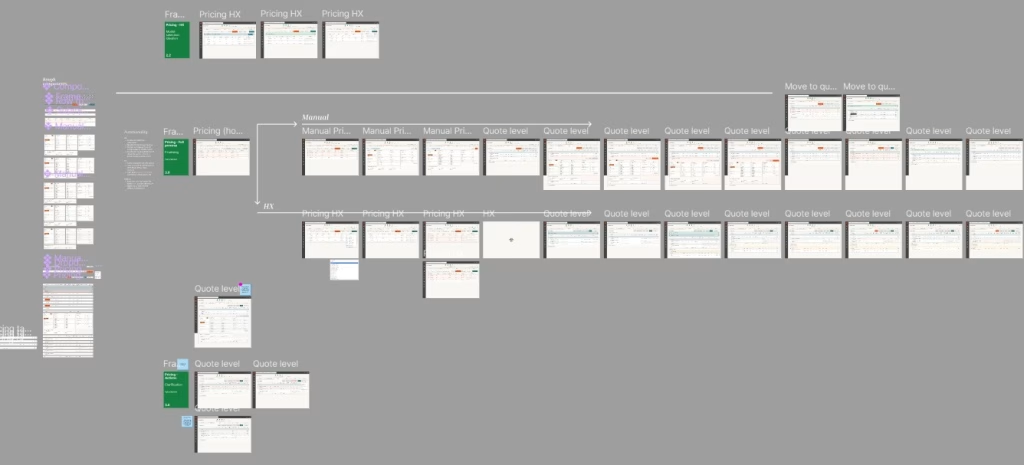
– Pricing progress for policy page, with significant reduction in clicks and pop-ups (as per user feedback)
06. My Role
As the lead UX/UI designer for 1WF, I am responsible for:
- User research, interviews and experience mapping
- Defining the information architecture and structural framework
- Creating high‑fidelity prototypes in Figma
- Facilitating stakeholder workshops and validation sessions
- Working closely with BAs and developers to translate UX decisions into feasible designs
- Maintaining consistency across redesign efforts and future enhancements
07. Outcomes & Impact
Completed: Submission Creation
- Clearer conceptual model adopted by underwriters
- Less reliance on Sequel Underwriter for structure creation
- Reduced confusion around data requirements and workflow steps
- Established foundation components for consistent design across 1WF
In Progress: Policy Page
- Early concepts reviewed and validated in the 1WF Forum
- Prioritised for delivery early Q3 2026 roadmap
- Underwriters report strong alignment with their mental models
- Xceedance teams confirm improved visibility and fewer manual workarounds
08. What’s Next
- Multi‑year pricing comparisons and data automation
- Finalising UI for pricing and resolve flow
- Structural UI consistency across all major 1WF screens
- Exploration of role‑based views
- Notification system for conflicts and assignments
- Full audit log integration

Public Sector Service Consolidation
Can a users identity be verified to access public digital services? How do we approach designing a service for such a broad range of customers?